Rather than prescribing rigid rules or checklists, these principles focus on the outcomes that underpin high‑quality, ethical, and client‑centred advice. They are designed to support advisers in applying their professional judgement thoughtfully – recognising that no two clients, firms, or advice scenarios are the same.
This guidance highlights the unifying principles and supporting behaviours that support the delivery of good financial advice outcomes. It is structured around the six stages of the financial advice process, providing a clear and practical lens through which advisers can consider the outcomes clients should experience at each step of their advice journey.
For details of each stage of the process, click on the stage buttons in the interactive tool below.
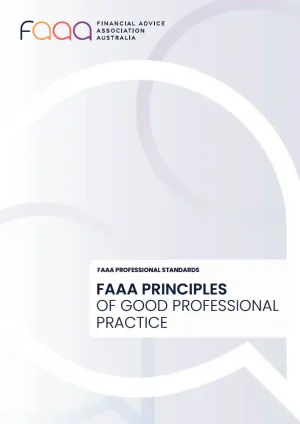
The FAAA Principles of Good Professional Practice booklet is also available to download.
The Principles offer a practical framework for reflecting on practice, guiding decision‑making, and building consistency across the profession, while allowing flexibility in how outcomes are achieved. They sit alongside regulatory and licensee requirements, helping professionals translate obligations into meaningful advice experiences for clients.
Grounded in global standards and shaped by the Australian advice community, this guidance supports advisers at every stage of their career, and contributes to stronger trust, professionalism, and confidence in financial advice.
The FAAA Principles of Good Professional Practice booklet is also available to download.
Please note
These principles are intended as a foundation on which advisers can develop their own approach to best practice. This guidance is not exhaustive and is not intended to prescribe how advice must be provided. It outlines principles of good practice and the outcomes they are intended to achieve, rather than specific actions.
Advisers must apply their own professional judgement when using this material, taking into account the needs and circumstances of their clients, relevant legal and regulatory obligations, and any licensee requirements.





 Menu
Menu